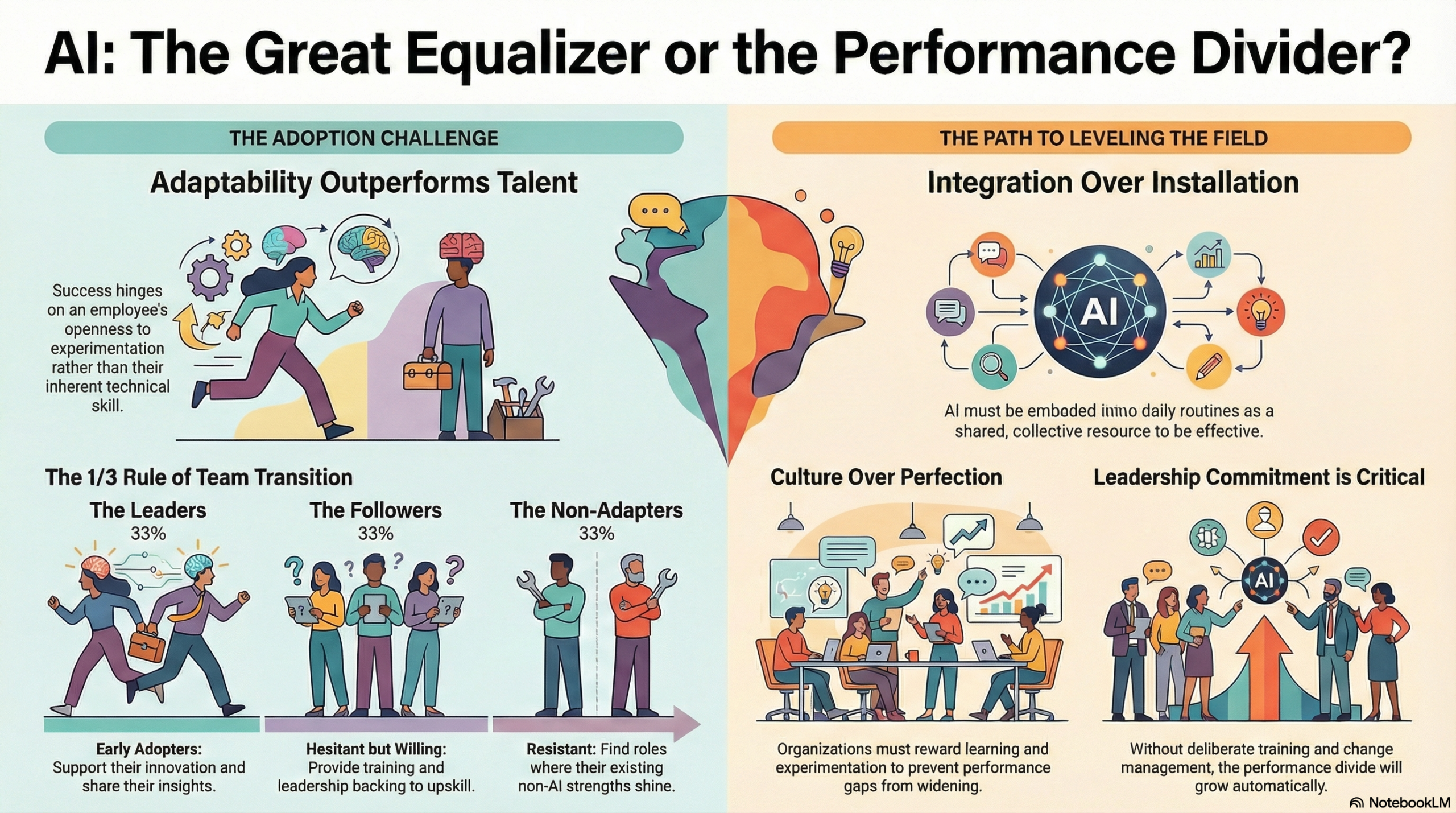
The impact of AI on workplace performance is both complex and evolving. And it’s sparking a critical question in organizations everywhere: Does AI help level the playing field, or does it widen the gap between your best and worst performers?
The answer? It depends entirely on how you implement it.
When AI Works: Integration, Not Installation
AI is most effective when it’s seamlessly integrated into daily processes—not just installed and forgotten.
Employees who view AI as a collaborative partner and actively incorporate its capabilities into their routines see substantial gains. Faster content creation. Greater accuracy in decision-making. More bandwidth for strategic work.
Here’s what’s interesting: these improvements aren’t about inherent talent. They’re about openness to experimentation and continual learning. Success hinges on building new habits and sharing practical insights across the team.
The people who win with AI aren’t necessarily your top performers. They’re the people who are willing to adapt.
The Real Challenge Isn’t Technical—It’s Human
The primary challenges with AI adoption are rarely technical. They revolve around managing change among people.
Yes, some high performers will quickly take advantage of new tools and build innovative solutions. But the greatest overall improvement occurs when you focus on upskilling and supporting those who may be hesitant but are willing to adapt with encouragement.
That’s where the real leverage is.
AI Can Break Down Hierarchies—If You Let It
AI has the potential to foster a more collaborative atmosphere across departments, breaking down traditional hierarchies.
When employees are given training, time, and leadership backing, more people can make meaningful contributions. In my experience working with teams, they typically fall into three groups:
A third who lead the charge. A third who follow after some initial encouragement. And a third who may never fully adapt.
Your job isn’t to convert everyone. It’s to support the first two groups and find suitable roles for the third—places where their existing strengths can shine while the broader team continues to advance.
The Risk of Widening the Gap
Despite best efforts, some performance gaps will likely persist.
Without deliberate, widespread efforts in training, leadership, and change management, there’s a real risk that the divide between early adopters and others will grow. The gap doesn’t close on its own.
The path forward involves not only teaching technical skills but also offering ongoing support and creating an environment where experimentation is encouraged, not punished.
The Bottom Line
AI can indeed help more people achieve higher performance. But it won’t happen automatically.
The most positive outcomes appear when teams embed AI as a shared, collective resource and support all members in making the transition. That means investment in enablement, leadership commitment, and a culture that rewards learning over perfection.
Get that right, and AI becomes an equalizer. Get it wrong, and it amplifies existing gaps.
The choice is yours.